Drinks will have to wait – covering flight MH17

1st MH17 tweet
My first tweet on MH17

Yes, I was quick off the mark recognizing the impact of the crash of Malaysia Airlines flight MH17, look at the time stamp. All the more surprising that I totally, but I mean really utterly and completely, failed to see this as an opportunity for work or as something that I personally needed to engage with professionally. I was busy doing other things.

That evening, I had arranged to meet a friend, a fellow journalist, for a drink and I was rather looking forward to it. When I called him in the early evening he was distracted and rather breathless, “I’m leaving for Kiev right now. Drinks will have to wait,” he said. Still, I did not catch on.

“I’m leaving for Kiev right now. Drinks will have to wait,”

Instead of focusing on flight MH17, I arranged to go see some stand-up comedy with another friend, also a journalist but less on the news side. Shortly after, I actually received a phone call from a radio freelance service, asking me if I was available for interviews on the crash of the Malaysia Airlines flight MH17 from Amsterdam, I declined, saying that I had really not read up on it and that I had a previous engagement (watching stand-up comedy, that is). But the request did finally get me to start the long-buried but still dormant routine of gearing up for a major news event. When the Washington Post approached me, via a friend and colleague, first by email and then by phone, I was almost ready. I still sputtered some objections, “I might be a bit rusty, I haven’t done this for a while.” The need in DC was clearly high, and the answer was an unperturbed, “I’m sure you’ll do fine”.

MH17 next of kin shielded by Dutch polcie
Dutch police at Schiphol Airport shielding family members of the victims of flight MH17 hours after it crashed

Having been pressed back into service as a hard news journalist by the Washington Post shortly after Malaysia Airlines flight MH17 went down on Thursday 17 July, I creaked into action. It’s always a jagged balance between supplying the desk immediately with a file on whatever you have available at that moment, calling around to gather more information, and getting to where it all happens, which in this case was Amsterdam’s Schiphol Airport where flight MH17 had left from earlier that day. Cancelling the evening’s planned entertainment and getting the first two items done, with my journalism saps slowly chugging into motion, took a little while but it’s like riding a bike; muscle memory takes over and so does the pain in the butt the first time you get into the saddle again.

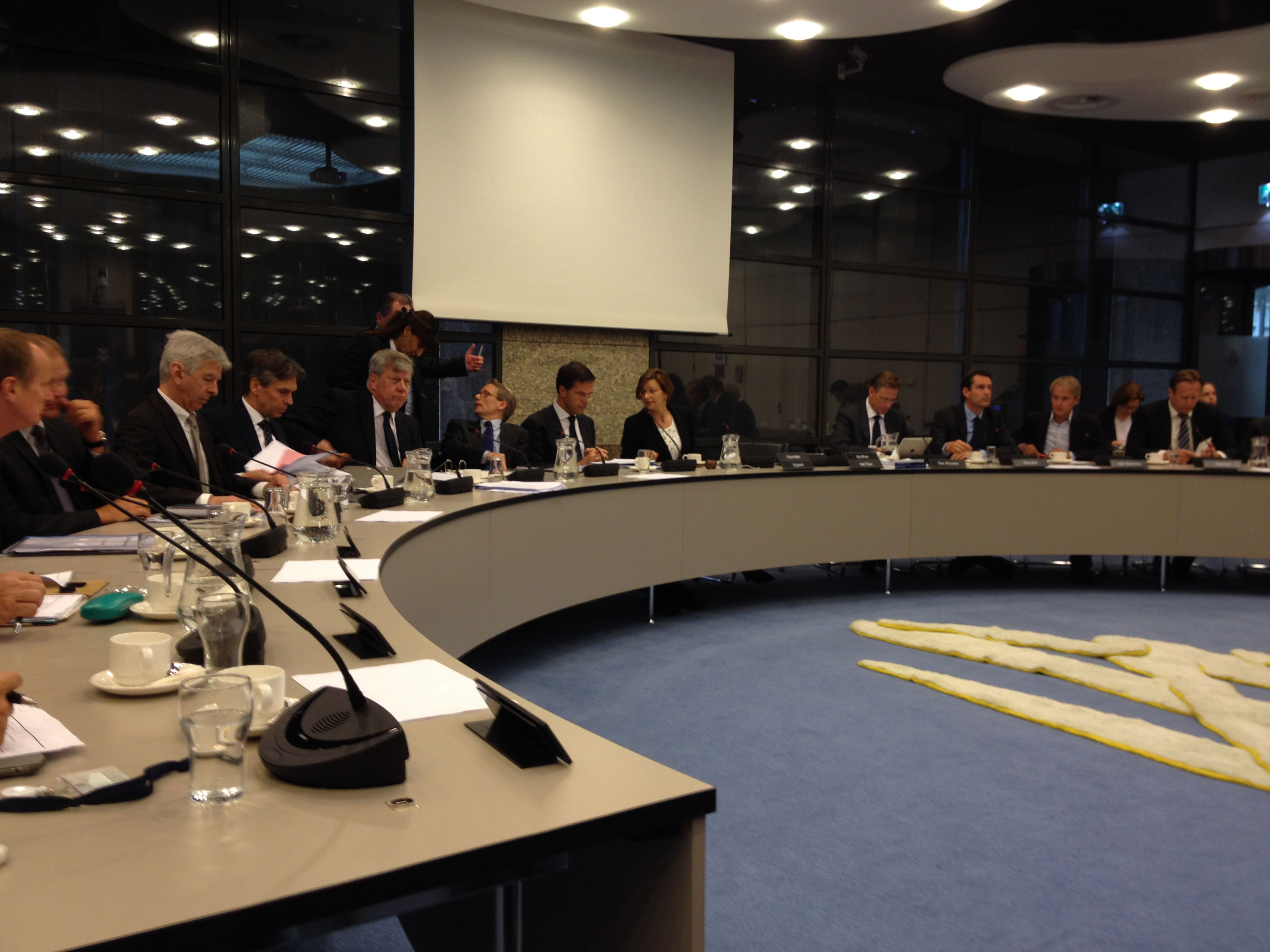
At Schiphol Airport, the telltale signs of a gathering media storm were already present, with satellite trucks parked outside the departures hall where the passengers for flight MH17 had just hours earlier checked in at the Malaysia Airlines desk. On TV I had seen journalists interviewing those about to board the evening flight. “It’s terrible what happened but I don’t have a problem taking the next flight,” was the typically sober Dutch response. Families of those aboard MH17 had been trickling in for a couple of hours, having been told to gather at the airport’s “Dakota bar”. Dakota, as in the old DC-3 military and commercial aviation workhorse, but the name may be a bit ill-chosen: As recently as 1996, 32 Dutch people died when a Dakota crashed in the north of the country.

The Dakota bar was closed to journalists and the next of kin were kept well away from the media. In fact, shortly after I arrived at the airport, the stricken relatives of those on board flight MH17 were shepherded into two buses outside the departures hall under armed police escort. Officers and airport security personnel set up a protective perimeter around the families and the buses, aimed specifically at keeping the press at bay. This remained the main focus over the next couple of days; Malaysia Airlines with the cooperation of the Dutch authorities sought to limit access to the next of kin and as a result, intended or not, monopolized the messaging around them.

The airline put them up in a hotel near the airport and flew in care-givers from Malaysia, even though not all of the Dutch family members displayed a thorough command of English. It kept emphasizing that it was doing everything to help the next of kin, and be that as it may, it was in fact relatively powerless in the face of the developing military and  geo-strategic situation at the crash site and in Eastern Ukraine, as was evidenced by its early continual emphasis on bringing the families to the crash site and then later having to abandon that idea. Nobody discussed the airline’s obvious interest in controlling the messaging from the family members – it greatly helped contain yet another PR-debacle – and the attitude of the Dutch authorities gave it all the room it needed.

The protective attitude of the Dutch authorities seemed to go beyond the appropriate measures to ensure regard of privacy in such situations. Of course, people who have suffered an appalling loss will have to be treated with respect and sensitivity but I wonder what the legalities are in ordering police protection against journalists, rather than against any likely security threat. At no point were the media given a chance to approach any from among the families who stayed at the hotel, had they volunteered to make themselves available. Such control over the messaging, again intended or not, did give the government a freer hand in shaping the message in the first few days, without anguished family members en masse turning to the media to up the pressure over the delay in access to the crash site and the return of the remains. Given what has transpired since, with investigators still not able to carry out their work at the site, we may well ask whether grieving and angry family members being more visible in the media, could have made a difference.

Listen to Malaysia Airlines VP Huib Gorter emphasize that the next of kin are “our main priority” at press conference announcing crash of MH17: 

And here he talks about the care-givers and flying the families to Kiev:

So, from the very beginning, the knowledge of what was happening on the ground in Eastern Ukraine was patchy and expectations about what could be achieved on the spot were unrealistic. I believe that this did not only affect the airline but also the Dutch government and possibly other governments as well.

One other remark that stood out at the chaotic press conference where journalists jostled for space and shouted to get a question in, concerned Malaysia Airlines choosing to fly over that part of Ukraine. It came up immediately, among the very first issues the media focused on. Mr Gorter said that Eastern Ukraine had not been earmarked a war zone in air traffic terms: “Had it been, then we would not have been able to fly over it.” This, and by extension how airlines cope with a multitude of conflicts of different intensities around the globe, has of course become a focus now, in the aftermath of the crash.

After filing a story on the press conference from Schiphol, my next priority was finding out where the airline had taken the next of kin, so I took a taxi to do do the rounds of the nearby hotels. Fortunately, I found them at the first address I looked, The Steigenberger Airport Hotel, just off the airport proper, on the edge of the Amsterdamse Bos, the city’s largest park. The police and ambulance outside were a dead giveaway. A small group of mostly Asian journalists was milling outside but nobody prevented me from entering the hotel and walking all the way to a conference room where the next of kin were gathering for a briefing. There I was stopped, though, and when I asked to speak to a spokesperson for the airline, the hotel manager himself escorted me from the premises with a curt, “you’ll have to go”.

Outside, several Dutch local care-givers or emergency services personnel were standing around, wearing reflective jackets. When I asked them if they had a spokesperson, to brief me on what was happening with the next of kin, they were even more hostile and one frostily told me, “you better leave”. I had to think back to that attitude, especially from care-givers, as the next of kin whom I talked to later on, where mostly happy to talk to the press and share their stories, it were the professional people around them who seemed hostile.

In the meantime, after I got home at what was by then 2 pm local time, another aspect of the crash had gained media attention: the presence on board of MH17of what was initially assumed to be a large number of participants in the AIDS conference in Melbourne. Almost immediately, particularly the names of those delegates started circulating on social media. That was another of the contradictions between on the one hand many people trying to observe an entirely justified restraint vis-à-vis revealing the names of victims and towards the next of kin, and what was happening on social media and in some newspapers on the other.

Retweets in the night from Thursday on Friday mentioning the AIDS campaigners who died on flight MH17

Very early on Friday morning, twitter was abuzz with the loss of so many AIDS campaigners and researchers, particularly from the Netherlands. The director of STOP AIDS NOW, Louise van Deth, received shocked messages from colleagues and others. I contacted her and she briefly answered some questions. This is one of the more general comments she made and I can see no harm in reproducing it here at this time:

It is a heavy blow that people who have been so active for so long in the fight against AIDS have been wiped out. Joep especially, is a dramatic loss for all kinds of research. He was a driving force behind the Amsterdam Institute for Global Health and Development.”

That was the end of day one, well the early morning of day two. More will follow on what else happened, including the less than smooth sailing for the Dutch government, even though there was a massive closing of the ranks…


Recovering from covering flight MH17

After a week of covering the crash of Malaysia Airlines flight MH17 from the Netherlands for The Washington Post I felt as churned up as ever after working a story. That had little to do with the awfulness of what happened, nor with the particularly iffy business of having to approach the Dutch next of kin and ask them for their stories. That’s all par for the course.

Eindhoven air base - return of victims of flight MH17
The reporter, with all the other reporters, at Eindhoven air base for the return of the victims of flight MH17 – photo courtesy TCF

I’ve seen bloodshed from close up in the Middle East and elsewhere, and just a couple of years ago I covered the aftermath of the attacks by Anders Breivik in Oslo. No, my misgivings and my agitation were entirely selfish in origin; back then I had done so while in a steady relationship with my newspapers. I knew why I was doing it and for whom, and I knew that despite the sometimes awful nature of the job, it was a necessary part of a still relatively varied palette of foreign coverage that I provided.

While covering flight MH17, the demands of disaster reporting, the intensity of  the work, and the ad hoc nature of my involvement made me feel I had been hired as a journalistic hit man, even though the Post request was entirely reasonable. A one-off contract killer at that; because beautiful execution or not, clients nowadays will move on with the news cycle, and not look back. This is no reproach to The Washington Post, they were fine and did what they had to do, it’s about the position of the precarious freelancer in today’s media landscape. (Note my craven sucking up to the Post. But seriously, it has nothing to do with them in particular).

So, what’s bad about that, you may well ask? Why not make a quick buck or two, really it’s not much more nowadays, and praise myself lucky that my name’s on a byline again and I’ve earned a couple of warm meals? Well, if it’s a one-off, the money is negligible, taken over the course of a year. If you’re in it for the money, you need to know that you have a reasonably regular source of income from a client, otherwise it’s hardly worth your while. For the exposure? Well sooorrryyy, all I can say: been there, done that. And what’s it done for me? You get the point. In the end, all you’re left with is a sense of obligation, to the story, to the profession, to your own sense of self, it’s what you do. But even then you don’t get to do it the way you know is right because you’re just the hired help.

Am I just an old, bitter curmudgeon? Yes, probably, but I have been active for a while in journalism and have my own ideas about how the media landscape has changed. For me, at least, not to have a certain type of relationship with a media organization means operating in a void. I’m not able to pitch the stories I think are worthwhile to a receptive editor and they cannot know exactly what I have to offer if they never take anything from me.  The old-fashioned journalistic enterprise was also based on trust from both sides. As a journalist you knew you could rely on your editor for support, or at least as regular an income as possible, even if you were a stringer. As a media organization, you were able to rely on these relationships to provide you with reliable information, timely signaling of interesting developments and total dedication the moment news broke. Now these bonds have been broken.

Compared to the loss felt by those with close connections to the people on Malaysia Airlines MH17, my self-involvement is distasteful and unseemly. But I’m not comparing it to their loss, plenty has been written about that both sincerely and touchingly as well as cringingly self-serving. If never another word is written about how the Dutch mourn, it will still be too much and too soon. Disasters get politicized and the grieving relatives become pawns in international intrigue and avatars for domestic bombast. But, oh no, don’t let them fall into the hands of the press, apart from Putin always the biggest villains on the block. At least that’s how the Dutch seemed to look at it, despite the overall meek nature of their domestic reporting, but more on that later.

If this jeremiad is unseemly in the light of a disaster such as MH17, then at least I’m doing it in the appropriate place, on a blog, the forum par excellence for unseemly expression. And if anybody has wondered (I doubt it) why I have not posted for almost a year, I’ll simply say this: I found out that I really hate writing for free, in a vacuum, and for no apparent reason other than self-publicizing. I’ll make exceptions, such as in this instance, when I think I actually have something to say. I’ll follow up this post over the next week or so with an account of how it went down…


A reassessment of The Act of Killing – or to write about what we don’t know

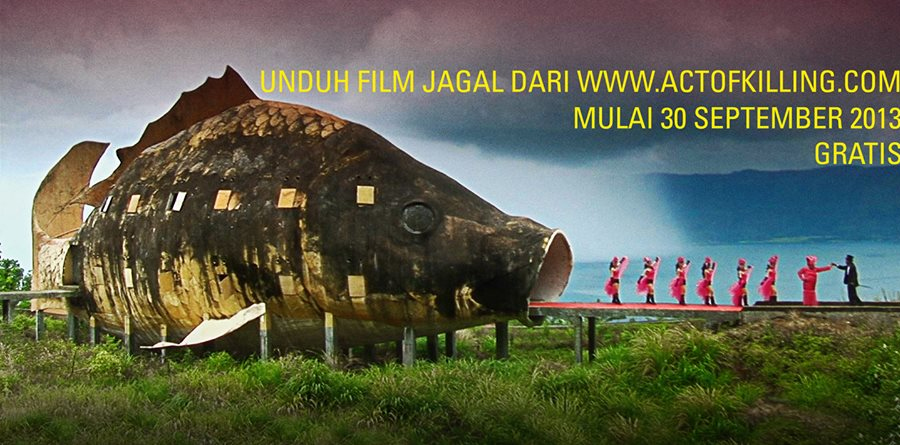
Jagal - The Act of Killing

Jagal, The Act of Killing in Bahasa Indonesia

On 30 September, Joshua Oppenheimer released his documentary The Act of Killing for free unlimited download in Indonesia, the country where 48 years ago the mass killing of communists and their sympathisers that his film deals with took place. It is  a bold stroke – the film, titled Jagal in Indonesian, had not been released in theatres in the country but it had been widely available at smaller venues and for group screenings. By all accounts the vivid and lurid description of how probably some 500,000 people or more were killed by the army, nationalist and Islamic militias and thugs has already had a momentous impact in Indonesia, where for decades state ideology erased these events from official history and demonised anything even remotely left-wing. The country still bans all things communist. Under the military-dominated regime headed by general Suharto that lasted until 1998, each year television showed the same propaganda movie on the alleged communist coup attempt and the kidnapping, torture and murder of six generals on 1 October 1965 that sparked the mass killings. Students across the country also had to attend screenings of the movie. “I remember watching the propaganda movie every year. It was scary,” one former student told me recently. Even after Suharto and his coterie lost power in 1998, there was no active, or effective, re-examination of the past.

 “I remember watching the propaganda movie every year. It was scary”

That is where The Act of Killing comes in. The film’s Holywoodised style, twisted narrative and obsession with sickening detail are what makes it compelling to a larger Indonesian audience, I was told on a recent trip to the country. Exactly the qualities that made me wary about what is after all a serious documentary about a horrendous, nearly forgotten crime are what make it succeed where more sober treatments have failed. When I earlier posted about The Act of Killing , I saw only one side of the story, what was in front of me, and other than many people who also saw the movie I was disturbed by the balance of its choices. I made the mistake of assuming that the main target for the movie was a Western audience while the real impact will be felt in Indonesia itself, of course. Also, I had no idea to what degree the old New Order, initiated by Suharto during his purge of the communists, still exerts a hold over the country, despite democratisation since the 1998 Reformasi.

A colleague of mine has made a career out of stressing the fallibility of journalists and of suggesting that we should be open about our lack of knowledge.

Indonesia, the largest Muslim country by population in the world, is a fascinating place with huge potential but seems to be held back by corruption and political paralysis that have their roots in the past. I cannot claim to know it after spending several weeks there and talking to many well-informed people but I understand a tiny bit more than before I went. Which brings me to the point I raise in the sub-heading: What can we write about that which we don’t know very much about? I’m not phrasing this as an absolute: Should we write at all about what we don’t know intimately? Because a negative answer would mean the total dismissal of the majority of what appears on social media and would even invalidate much of ‘traditional’ journalism. Clearly writers are not all-knowing, even if they are experts in their fields. We all have to fill in the blanks to a certain degree and how intelligently we do that may often be more important than the extent of our knowledge, assuming that we possess some basic information on our subjects. A colleague of mine has made a career out of stressing the fallibility of journalists and of suggesting that we should be open about our lack of knowledge. I find it patronising and impractical to pack stories with lists of caveats and mostly just assume that I’m writing for a relatively sophisticated audience that realises that I give a picture to the best of my abilities. But there are occasions where you fuck up or where you change your mind after finding out more. I guess my formula to deal with that is: Try very hard to avoid it but don’t be paralysed by it.

Walking the shark

The shark, Hemiscyllium halmahera, uses its fins to wiggle along the seabed and forage for small fish and crustaceans – ‘walking shark’ discovered in Indonesia – The Guardian

I caught up with the shark as he was promenading off Bali the other day and he was in a bit of a rueful mood. ‘Wiggle? I ask you, do I wiggle?’ he mewled, sounding aggrieved and displaying several rows of sharp teeth in what I initially mistook for a threat but later realised was just his way of sneering. He distractedly masticated a bucketful of small fish and crustaceans that the bountiful seas of Indonesia deposited straight into his mouth as if from a conveyor belt. We pulled up some rocks around a tabletop of coral and sat down to chew the fat for a couple of minutes. ‘Oooh, big deal, a walking shark,’ he snorted. ‘As if we hold the presses every time we see an underwater human or one that has a decent taste in sushi.’ With one swell bite he took the side off a passing grouper, loudly saying ‘yummy’ and looking very pleased with himself. ‘Listen, this whole walking thing is a bit of a scam. Of course we prefer to swim, have you tried walking at this depth?’ He did a comical impression of maneuvering a giant umbrella into a hurricane. ‘We just do it to blend in.’ I nodded understandingly, ‘right, to avoid the shark fin hunters.’ The sitting shark growled at me contemptuously, ‘Most of those supposed fins are flippers that we tear off gormless divers like you and then stick to our backs. Ever wondered why they taste so rubbery? No, we walk to avoid having to bribe the coast guard. They suspect that we sharks make money posing for tourists and they want their cut. It confuses them when we walk. But thanks to that bloody newspaper article, they’re on to us.’ I nodded sympathetically, ‘yes, I wish the press would mind its own goddamn business.’ We silently watched the fish trying to scramble away from us for a while, the shark contemplating the vagaries of life and me enjoying the oxygen as an underwater hubbly bubbly. ‘You’ve got a bit of seaweed stuck to your upper lip,’ I solicitously pointed out to the shark. He scowled at me, ‘that’s my version of a holiday beard, having no chin and all. Actually, after having seen Jeremy Paxman’s attempt, I think I’m doing rather well,’ he said a bit smugly. ‘Sorry,’ I blurted, trying hard not to stare. ‘So, where did you summer this year?’ The shark sighed and gave its version of shrugging its shoulders, which would have been the subject of another excited article had any scientists or journalists been around: a shrugging shark! ‘We went to see my cuz in the Med. The place has become a dump,’ he answered disgustedly. I nodded in agreement, ‘yes all the tourist development can get a bit much.’ Once again the shark looked at me as if he’d run in to an uncomprehending mollusc that could not be eaten and had to be endured. ‘No, no. It’s just that on the European side they always used to dump lots of good stuff into the sea. Whole sides of beef sometimes in Greece. Those guys knew how to waste their souvlaki on a grand scale. But now, nada!’ I wanted to point out that he was mixing his Greek and his Spanish but thought better of it; you don’t want to annoy a shark, not even a walking one. He wasn’t done yet with his holiday gripes. ‘And off Syria, where we often used to find these bodies floating in the sea, as if they were executed by some madman but never mind, I got the most horrible chemical taste in my mouth and I was sick for days. I tell you, that ruined my break well and truly.’ I tutted in sympathy, ‘well at least you’re OK now and back home safe and sound.’ The shark started getting up from the rock he had been squatting on, ‘Yes, back to the grind of freaking out tourists.’ As he ambled away he called over his shoulder, ‘I’ve had it with Europe and the Middle East. Next year I’ll focus more on Asia, so catch you here again if you’re around.’ I watched him wiggle away, yes he did wiggle, and resolved firmly to stay home next year; who wants to hang out with a grumpy, hungry and sick shark, with blisters on its fins to boot?

Taking a dive

I’ve always been fascinated by that stuff. I want to experience what it’s like to be in a war

OK, I know I’m banging on about the war but ’twas not my intention when I came here for a nice weekend of diving. Bali, the island of the gods of mass tourism, complete with underwater traffic jams and prepubescent Legong dancing girls. Yet even here the war catches up with you, well me, in unexpected ways. And by the way, for someone used to the Middle East Bali’s supposedly strict security measures may seem touchingly low-key at the moment.

Anyway, on my first dive trip, and the drive to the site of the wreck of the USAT Liberty, I was joined by two gregarious young Americans, students at Wharton who just started a six month stint in Singapore, Ben and Arman. They duly asked me what I did for a living followed immediately by, “ever been to any war zones?”. For the next four hours, except underwater where talking is frowned upon, they continued to question me relentlessly on the subject. One of them in particular unhesitatingly expressed an interest in the mechanics of war, the personal danger etc. including the desire to actually be in a war. Short of joining up that is. I suppose because you don’t squander a degree from Wharton on the army.

Don’t get me wrong, I have no problem with either of these seemingly reasonable and well-travelled business students. They sounded sincere and very well-informed. Who says that today’s students don’t follow the news?

What did strike me was their interest in my war stories. I’ve written before that usually people’s eyes start glazing over when I talk about my job and what I did in some conflict areas. I always thought it was me, the way I told it. But these two, a bit too long only to be polite, seemed genuinely interested, in the physical reality of the journalist, in the details of war and in some broader policy questions. They asked why journalists keep doing it if so many get killed. So sue me, I may have hammed it up a bit. Or maybe not so much. Maybe it’s an age thing and the people in my cohort have heard it all before. Who knows. Maybe it’s just that war is indeed a young men’s game and the younger we are, the more we’re fascinated by it.

We did two dives to the wreck of the US Army Transport Liberty, an American warship that was torpedoed off Bali during WWII. The two war-curious Wharton students thought the first dive a bit dull,we stayed well clear of the structure and just watched the marine life. But they went all hooyah over the second one when we ducked through some openings and hovered really close. None of it means much, except that I went for a dive.

20130826-103858.jpg

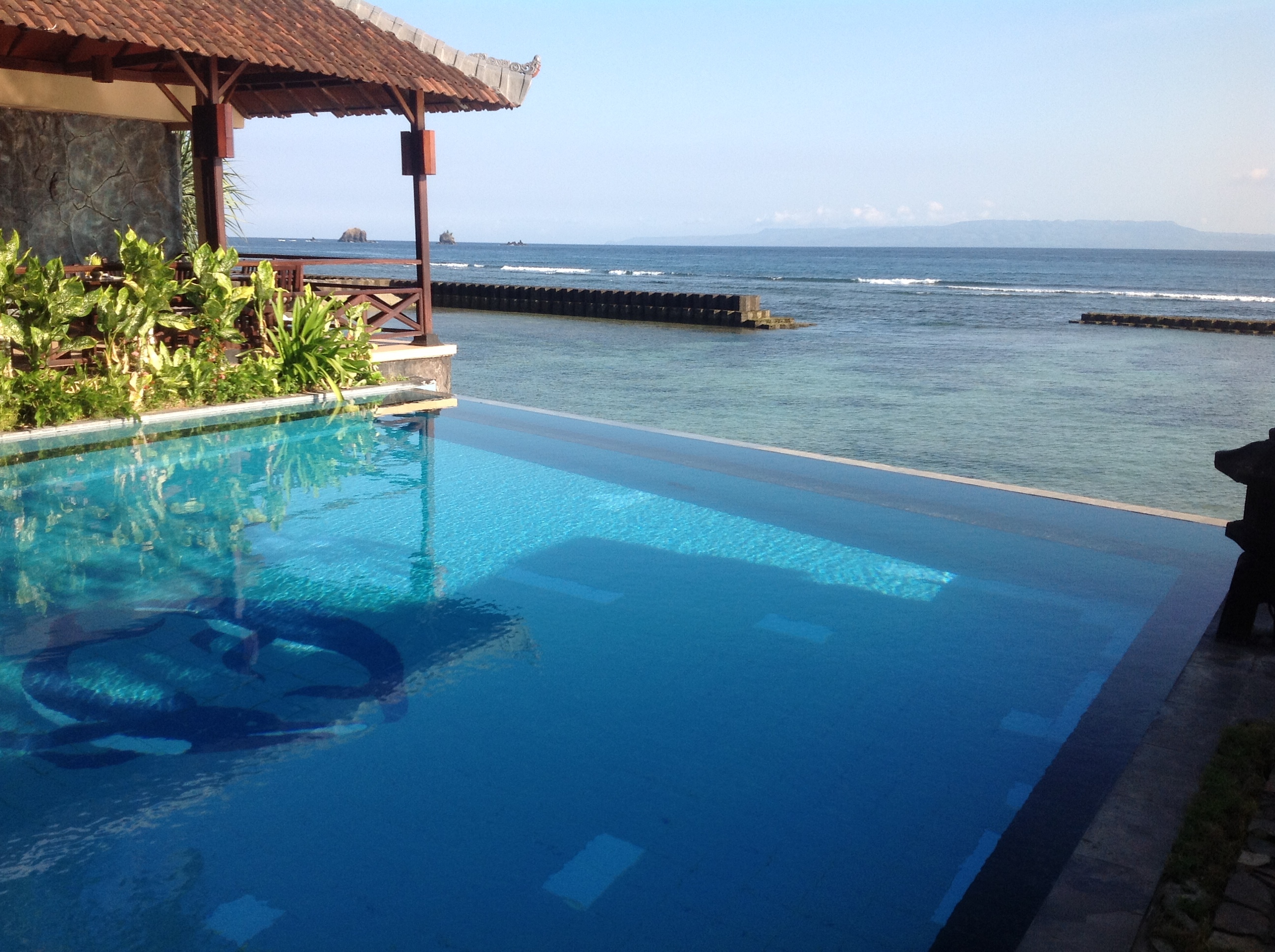
The Balinese coast at Candidasa

The banality of motivation

I finally went to see, Infidel, Tim Hetherington’s posthumous solo show at Foam Amsterdam and it left me in a heavy mood. Even accepting that the show offers only a small glimpse of his work as a photographer and cineast, its quite relentless focus on war is a chilling indication of the life he made for himself and how he chose to frame his own experience. It is not a choice I’d ever be comfortable with. I count myself lucky that besides covering the shooting and explosions I had an alternate existence reporting lighter fare such as the plastic surgery craze in Beirut or drunken gay parties in the Saudi desert or even the more staid political and business stories. In Diary, the very personal video account of his work, just a few minutes of syrupy footage are dedicated to what might count as the good things in life. “This is as good as it gets” a voice (Hetherington’s?) declaims over idyllic images of a blond girl playing in the green grass against the backdrop of a forest, “This is England, early autumn. Look at it”. And back to the war it is.

I noticed from the comments on my previous piece on Hetherington that many people wonder why war photographers do what they do, and keep doing it. I have no answer and maybe there is no single answer to that question. Questions of motivation tend to lead to circular arguments: I did it because I thought I had to/it would be good for me/it would be good for others/I wanted to see it/understand it etc. Yes, but why?

Which leads me to what I had intended to write about originally in this post, Hannah Arendt and the banality of evil. Last week, while I was sick with a stomach bug, feverish and weak, flitting in and out of semi-lucidity and the bathroom, I finished re-reading her account of the Eichmann trial in Jerusalem. Probably not the best way to ingest a treatise on the Holocaust, a painful exercise at the best of times, but I had been at it since I saw the eponymous Margaretha von Trotta movie in which Barbara Sukowa plays the Jewish German/American political thinker as she attends the Nazi’s war crimes trial and faces the reaction to her controversial book on it afterwards:


I thought the movie was OK, not great, and it addressed some interesting moral questions. Main among them was the price we may have to pay when we stick to our convictions and confront people with what we might regard as uncomfortable truths. But after re-reading Arendt, I think that the movie missed the point. It portrays Arendt as overwhelmingly driven by a a quest for logic and rationality, despite some heavy-handed attempts to balance that with a couple of rather mushy scenes from her private life supposedly meant to show her soft side. Reading Eichmann in Jerusalem, Arendt’s account and analysis of the trial, I was struck by how she is clearly struggling with her own feelings. It can be seen in the overly zealous attempt to create distance between herself and the Jewish participants in the trial, the prosecutor, the judges, the witnesses etc.  and conversely her strained apparent attempt to be fair to Eichmann, by her small digressions and detours, and by the tone, which is didactic but strangely equivocal at times. It may be reading too much of her biography into her work but it’s hard to see how she could have written about it free of emotion; after all it dealt with genocide, the extermination of her own community, the perversion of her actual and philosophical birthplace and at a different level with her conflicted feelings toward the Jewish people and the state of Israel. In the context of her time it made sense for her to present the account as a strictly neutral, rational analysis of the proceedings. Nowadays we’d personalise such a story in a flash, appropriating it as our own if there’s even the slightest connection, to better stake a claim to it.

Arendt of course had good reason to present her account as unemotionally and rationally as possible; it was the continuation of an immense and important professional body of work on totalitarianism and violence. Yet, knowing that as a young woman her dissertation was on the subject of love in the thought of St Augustine, her later turn toward researching anti-semitism, totalitarianism and violence is very likely to have been motivated exactly by the kind of personal interest that she sought to ban from her Eichmann analysis. I’m not often inclined to advocate partisanship in reporting – Eichmann in Jerusalem was also a kind of reportage, for The New Yorker – but it’s probably preferable to an unsuccessful attempt to cover up one’s feelings toward a highly emotional subject, such as the Holocaust. Then again, we owe Arendt a huge debt for her insight that great crimes can be committed in a very humdrum way, that going along with injustice is often the easy and even seemingly logical option. Whatever the motivation behind her work, it is important and we are lucky to have it. Maybe we should look at the work of war photographers such as Tim Hetherington in the same way. Motivation is neither here nor there and is often unimportant compared to the outcome. On the other hand we often cannot help but let  the writer’s/artist’s motivation affect our understanding of the work. It remains a conundrum.

Egypt, when activists turn on journalists

Amidst all the turmoil in Egypt, one aspect may have by-passed the casual observer. Foreign reporters and commentators have become targets for the ire of some of the very same activists, bloggers etc. who supported the ‘coupvolution’ that deposed Mohamed Morsi and who say that they stand for human rights, democracy and freedom of expression. It has given rise to such choice blog headlines as ‘Fuck Western Media’. These critics seem to be irate at correspondents not completely buying into their own line of reasoning. From mild charges of ‘misrepresentation’, the accusations at times veer into the realm of conspiracy theory. With the press and foreign correspondents under attack anyway in Egypt, we really don’t need that from the supposed democratic part of the commentariat. I have published a piece on it on openDemocracy.

Just to show that I’m not the only one noticing this trend among activists, here’s a tweet by a Swedish journalist on a similar phenomenon. He draws a straight line from how the party of Hosni Mubarak, the NDP, and then the Muslim Brotherhood, the MB, used to address foreign reporters to what he hears nowadays:

I don’t want to single out any activist, blogger or tweeter and many seem to have moderated their views as the situation has unfolded. Also, many of the online attacks on the media come from more conservative sources who probably used to be aligned to the Mubarak regime and now have thrown in their lot with the mass protest movement and the army. Still, whatever the practical contingencies, that’s not fit intellectual company for those who champion freedom. This is not about muzzling the critics of the Western press but it’s about not fanning the flames of incitement at a time when reporters get physically assaulted, arrested, intimidated and worse.

(Probably not) the final word on the war correspondent’s dilemma

Here’s a very considered, courageous and deep-digging inquiry into the question of why war correspondents do what they do.

PODCAST – Diary of a bad year: A war correspondent’s dilemma – NPR’s Kelly McEvers

And more at transom.org It is infinitely more complex, sophisticated and inquisitive than my short blog post on the subject. I wonder if there’s anything left to say. Then again, everybody has a slightly different story.

An evening on Tim Hetherington – and all I took were some lousy phone pics

More musings on conflict reporting – my conflicted view

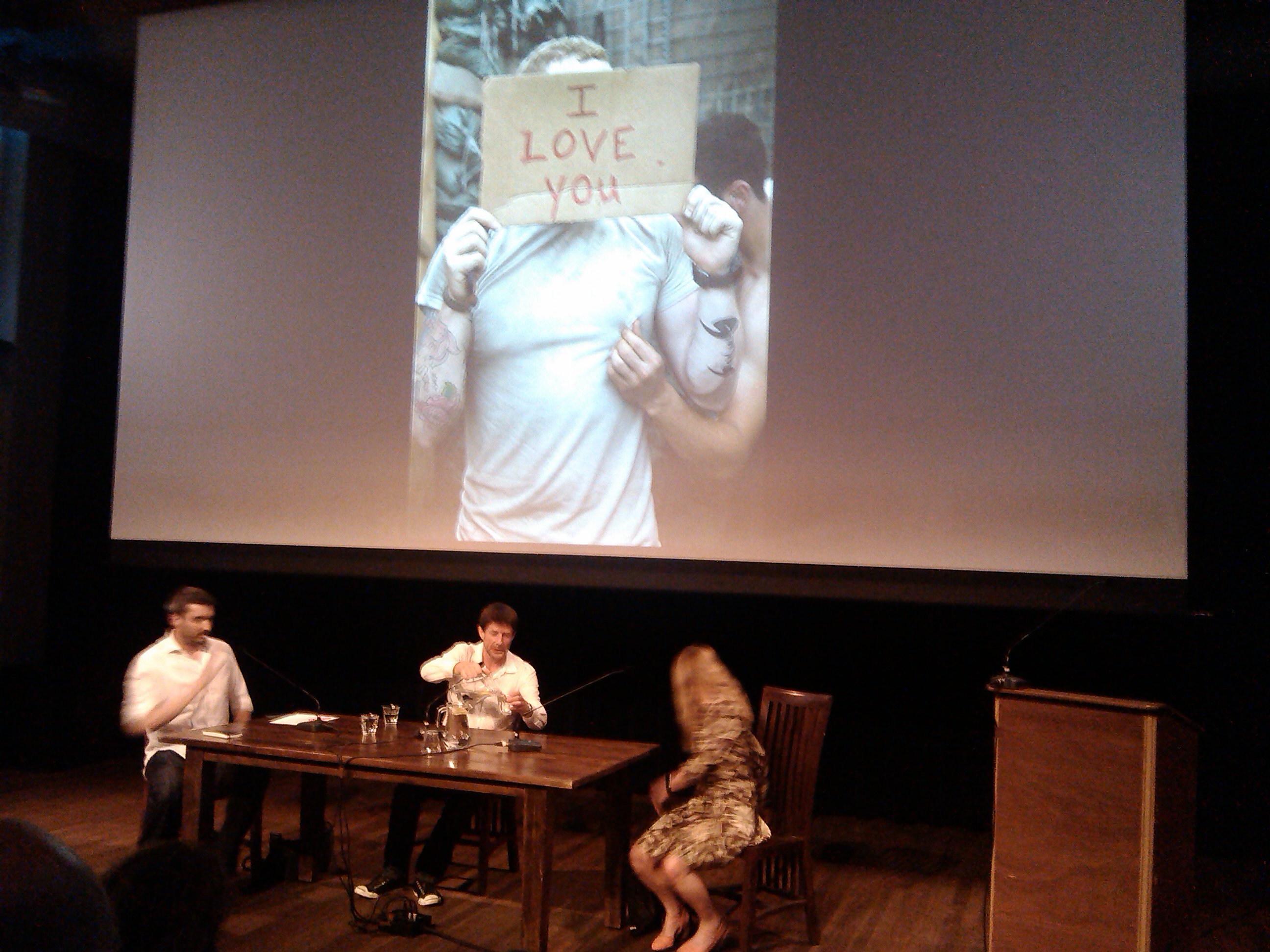
Stephen Mayes, director of the estate of Tim Hetherington, talks at de Balie in Amsterdam

Tim Hetherington was a wonderful photographer and documentary maker who operated mostly in conflict zones, which on 20 April 2011 got him killed in Misrata, Libya. The Arab Spring, so hopefully named, has been particularly deadly and otherwise damaging for those covering it. An exhibition of Tim’s work arrived in Amsterdam in July and a new film on his life, a tribute directed by Sebastian Junger with whom he made the 2010 award-winning documentary Restrepo on life at an American outpost in Afghanistan, also had its Dutch premiere…


Various friends of Tim’s attended the launch and gave presentations that I won’t go into; I want to talk about me and Tim. I never met Tim, never heard of him before Restrepo and only vaguely afterwards. But we had a few things in common, apart from rugged good looks (I wish). We both did journalism courses in the UK and we both ended up in war zones. I know it’s not much but it’s more than some. Yet when I listened to the presentations and as I watched the film, the gulf between our experiences seemed vast, making me question the way I engaged with some of the same topics that Tim came across. There was a charming bit in which he has to talk about what it is that he’s doing. He starts out with a rather worthy description, only to stop himself short and say “that’s bullshit”. More attempts follow before he gets it right, kind of. It feels like it’s meant to show the difficulty war reporters have in talking about their work without sounding pompous, full of pathos and bravado or, on the other hand, overly jaded. But it can also be seen as defanging any such qualms pre-emptively as in, ‘see, he knew how difficult it was to talk about it’. Yet he talked about it a lot, on camera and on the record…


It always makes me feel uncomfortable. I have not heard people talk about war reporting in public in a way that sits well with me, probably reflecting a puritan streak that urges me: do, don’t tell. I find it almost impossible to talk about my decade or so covering conflict in a way that does not somehow trivialise it, dramatise it or worse, instrumentalise it for my own greater glory. When I sometimes try to discuss it, as dispassionately and in as sparse and stripped-down terms as I find possible, it feels as if nobody listens. Poor me. It is as Tim also said: you need to communicate in order for people to be able to engage with the subject. But I feel utterly conflicted about people who continue to communicate such issues outside the context of immediate war reporting. In the film on his life, many also said of Tim that he was always engaged with his subjects, the people he came across, whom he kept treating as individuals, as human.

Stephen Mayes, James Brabazon and Max Houghton talking about Tim Hetherington at de Balie, Amsterdam
James Brabazon, James Brabazon and Max Houghton talking about Tim Hetherington at de Balie, Amsterdam

Expressing such engagement also makes me somewhat uncomfortable. Maybe there’s a big difference between writers and photographers, also in the levels of danger encountered and in the way they process what they see, but I find the exhortation to keep in mind that the people you write about or photograph are also human, individuals with their own stories and not just characters in a larger plot, utterly redundant and preposterous. The cliché that war reporters only write about cannon fodder or people as numbers, is misleading and tiresome. Overwhelmingly, reporters who risk their lives, who insert themselves knowingly into dangerous situations, are very much aware of the excess of humanity around them. Human yes, always interesting? No. War and conflict tend to polarise people, resulting in a couple of standard narratives that many of those involved and engaged in conflict employ. It is a reporter’s job, maybe not a photographer’s, to puncture those shells and dig down to the real story if there is such a thing. Combat may temporarily heighten one’s senses but continual conflict flattens everything, including what distinguishes people. After a while, all stories become similar, whether it’s an American soldier’s or an Iraqi Jihadist’s. The logic of violence is often frighteningly similar and therefore also horribly clichéd. Yes, it is ritualistic and it has to do with male bonding but to me these themes never held the fascination they seemed to have had for Tim Hetherington. Perhaps that is at the root of much of my unease; I have always been a reluctant war reporter with a visceral distrust of people who sought out such situations willingly. Just maybe the life and work of Tim Hetherington will start me thinking differently about such things. But I’m a hard nut to crack.

I yet have to see Tim Hetherington’s show ‘Infidel’ at Foam Amsterdam and may post on this again afterwards…

Art, conflict and pretty pics – Nat Muller on Richard Mosse’s The Enclave

Poster for The Enclave, Irish Pavillion, 55th Venice Biennale
The poster for The Enclave at the 55th Venice Biennale. On the back Lac Vert Lullaby. A text at the bottom said that it was recorded by Ben Frost at Lac Vert, Congo, in 2012 for The Enclave.

“Artists do not per se have an accountability towards their audiences. If anything their accountability is to make interesting work”

Nat Muller, independent curator and critic with her share of experience  in conflict areas and former conflict areas such as the Middle East and the Balkans, shines her light on Richard Mosse’s The Enclave, shown in the Irish pavilion at the 55th Venice Biennale. She reacts to my doubts about a work that straddles the divide between art and photojournalism, and more directly to the criticism by Louise Williams, the Irish journalist with extensive experience in Congo. You can follow Nat and Louise on twitter: @nat_muller and @Loureports and Louise has a blog: travels with my microphone